
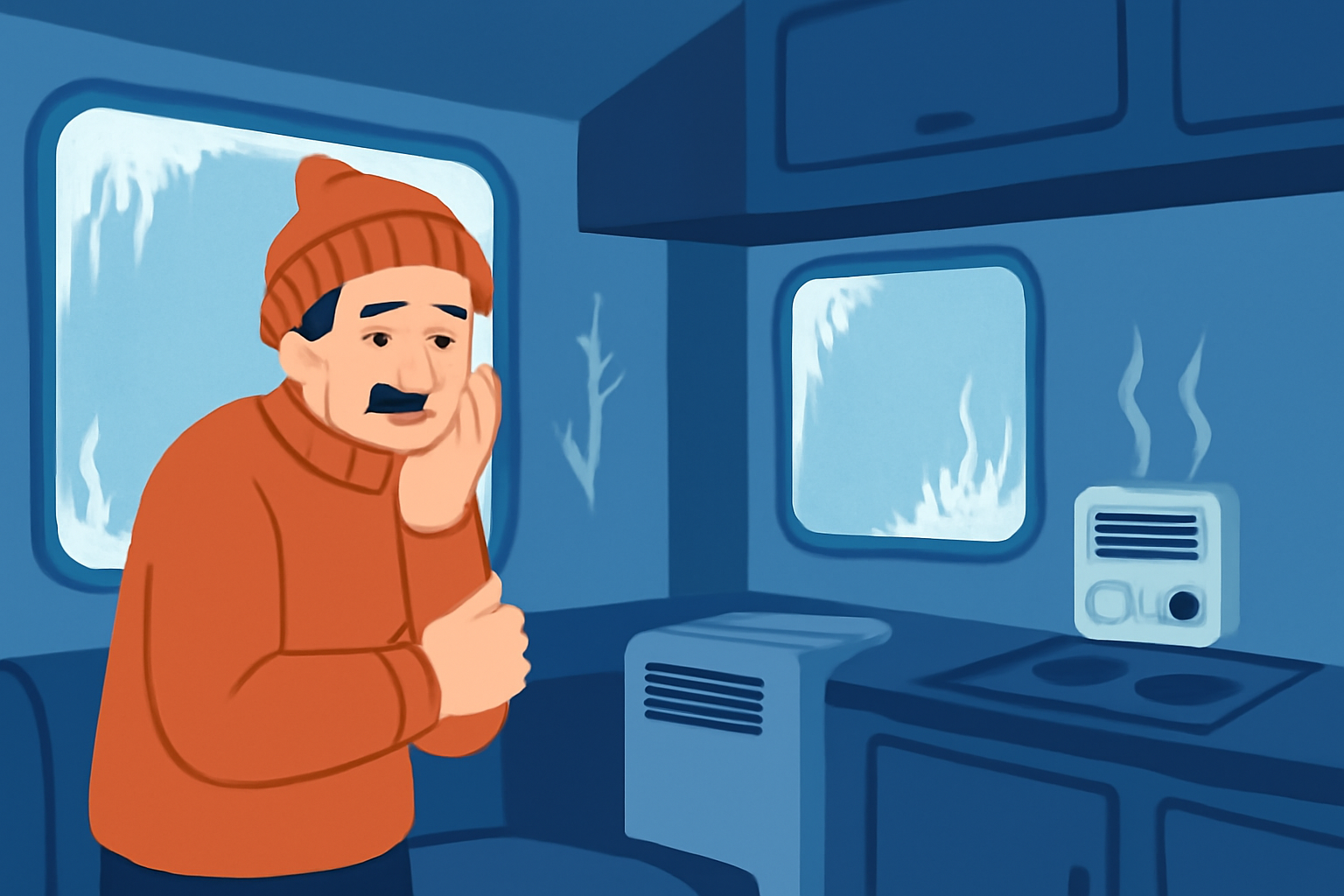
Living in an RV or travel trailer during your first winter requires keen preparation and understanding of the realities faced in colder climates.
Insulation Needs: Standard RVs and travel trailers are typically designed for three-season use. Insulating your unit should be a priority. This may involve skirting to prevent cold air from circulating under your RV, adding thermal window covers, and using insulating foam boards in storage areas. Consider investing in a high-quality space heater or heated mattress pads for added warmth.
Managing Water Systems: Frozen pipes can be a major issue. To prevent this, use a heated water hose rated for low temperatures and consider tank heaters for your fresh water and wastewater tanks. Empty your tanks regularly to avoid any freezing mishaps.
Be Vigilant About Propane Usage: Heating an RV in the winter can lead to increased propane consumption. Monitor your propane levels closely and have access to a reliable provider. Consider investing in additional propane tanks for uninterrupted heating.
Ventilation and Condensation: Winterizing often seals the unit tightly, leading to condensation and potential mold issues. Use dehumidifiers and crack a window to ensure good air circulation. Ceiling vent covers can help ventilate without letting in too much cold air.
Road Conditions Awareness: If you intend to move your RV during the winter, be aware of road conditions. Icy roads can be dangerous, and you’ll need chains or snow tires for traction. Always monitor weather forecasts and be ready to delay travel if conditions aren't safe.
Power Supply Concerns: Running additional heating devices can increase the electrical load. Ensure your power supply and connections are robust enough to handle the increased demand and consider having a backup generator for power outages.
Lifestyle Adjustments: Routine activities such as cooking and showering can quickly increase humidity levels. These should be carefully managed through ventilation to prevent ice formation on walls and windows.
Understanding these challenges and preparing adequately can help ensure a comfortable and safe first winter living in an RV or travel trailer.