
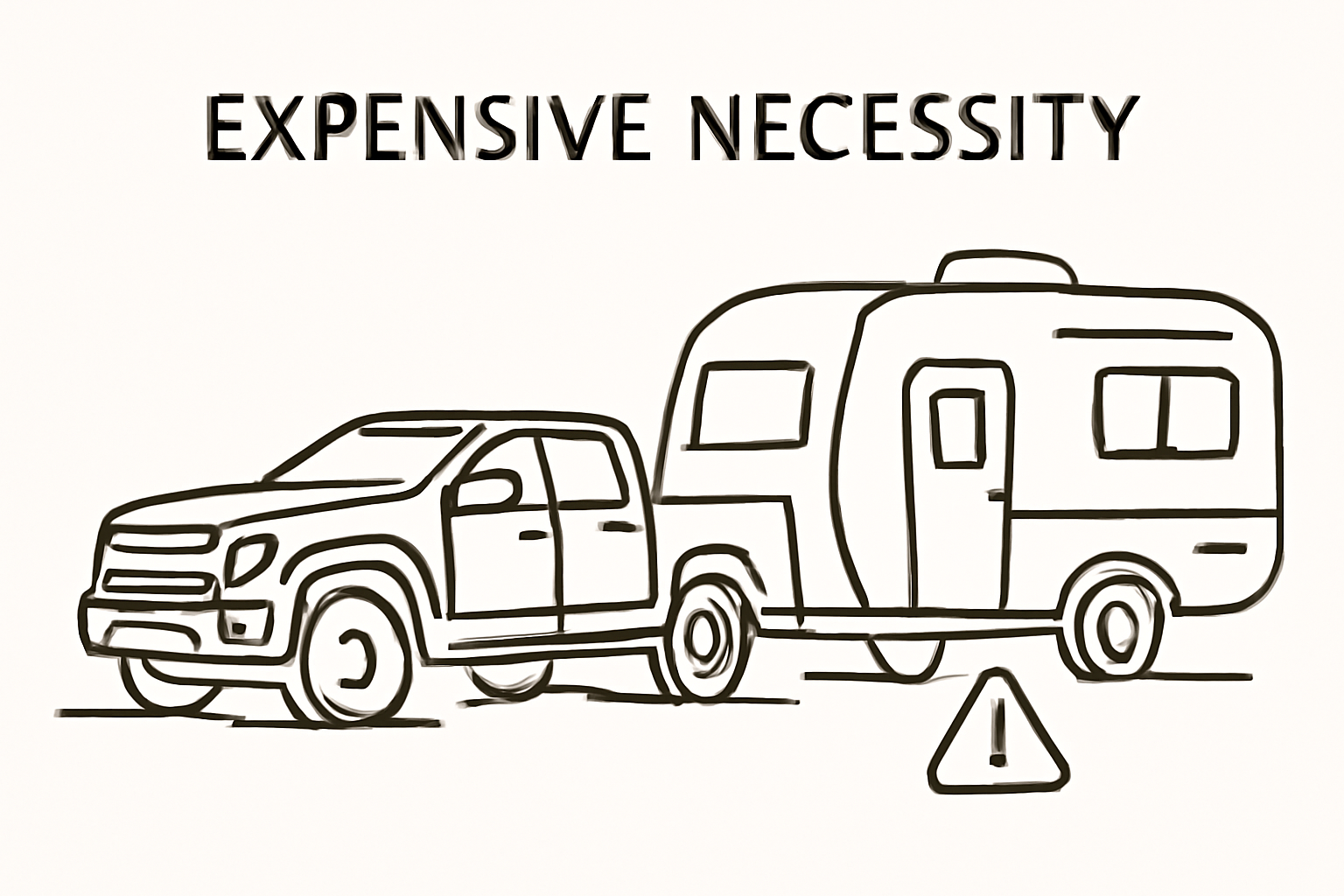
When transitioning to an RV or travel trailer lifestyle, selecting an appropriate towing vehicle becomes a critical decision. The choice directly impacts safety, convenience, and travel efficiency. Understanding key factors such as towing capacity, vehicle weight, and technological features is essential.
Towing Capacity: This is the maximum weight a vehicle can safely tow, encompassing the weight of the trailer, cargo, and any passengers. Towing capacities vary significantly among different vehicle types, with pickups generally offering superior capabilities compared to SUVs or regular sedans. Verify the gross vehicle weight rating (GVWR) and gross combined weight rating (GCWR) when determining an appropriate towing vehicle.
Engine Power and Torque: The power of the engine is crucial for towing heavy loads, particularly during uphill climbs or off-road travel. Diesel engines are often preferred for towing due to their superior torque, which affects pulling power more effectively than horsepower alone.
Transmission: Automatic transmissions are generally favored over manual for towing, as they manage additional stress more efficiently and offer the ease of use during long hauls. Many modern vehicles come equipped with special transmission settings designed specifically for towing.
Brake Systems and Suspension: Consider a vehicle with a robust braking system to ensure safe stopping distances when towing. Enhanced suspension systems also contribute to stability by absorbing bumps and reducing sway.
Cooling Systems: Towing imposes extra strain on a vehicle’s engine and transmission. An adequate cooling system, with features such as additional radiators or transmission coolers, is critical to prevent overheating.
Weight Distribution: Ensure the vehicle offers the ability to evenly distribute weight to prevent undue stress on the axles and tires. Weight distribution hitches and sway control systems can mitigate risks of trailer sway.
Hitch Types: The appropriate hitch class depends on the size and weight of your RV or trailer. Class III or IV hitches are often utilized for mid-to-large-sized trailers, while fifth-wheel hitches are necessary for larger trailer models.
Four-Wheel Drive (4WD) or All-Wheel Drive (AWD): While not mandatory for all situations, these features can be beneficial when navigating off-road or adverse weather conditions.
Technology Features: Modern towing vehicles increasingly include advanced brake controllers, back-up cameras, and blind-spot monitoring to enhance towing safety and ease of operation.
For prospective buyers, carefully assess the needs of your trailer, travel ambitions, and personal driving preferences. Investing time into researching and comparing models will pay dividends in safety, efficiency, and enjoyment in your RV lifestyle.